
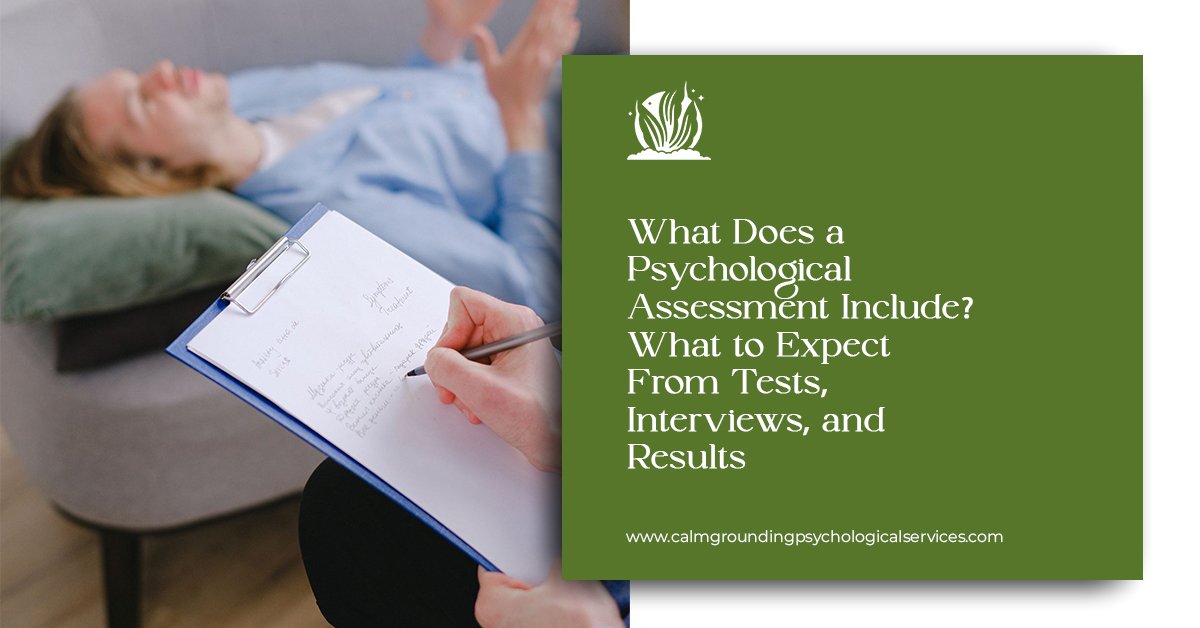
A psychological assessment typically includes a clinical interview, psychological tests, questionnaires, behavioral observations, and a review of relevant background information. Together, these components help a psychologist understand how a person thinks, feels, behaves, and functions in everyday life. Depending on the reason for the evaluation, an assessment may explore concerns related to mental health, emotional functioning, behavior, cognition, learning, or everyday functioning. The specific tests and information gathered vary based on the questions the psychologist needs to answer.
What Happens During a Psychological Assessment?
The process often begins with a clinical interview. This conversation gives the psychologist an opportunity to understand what brought you in, what you have been experiencing, and how those concerns affect everyday life. It will cover personal and family history, education, work, relationships, medical history, emotional experiences, and previous treatment.
The interview also provides context for the rest of the evaluation process. For example, difficulty concentrating can have different possible explanations. Understanding when the concern began, where it appears, and how it affects different areas of life helps the psychologist decide what information will be most useful to gather.
What Does a Psychological Assessment Include?
The specific components of a psychological assessment depend on the purpose of the evaluation and the questions the psychologist needs to answer. An assessment will include:
- Clinical interview: The psychologist will discuss with you current concerns, personal and family history, daily functioning, and other relevant background information.
- Psychological tests: Standardized measures may be used to examine areas such as personality, emotional functioning, behavior, or other psychological characteristics.
- Cognitive assessment: Depending on the referral question, testing may examine attention, working memory, processing speed, reasoning, learning, and problem-solving.
- Questionnaires and rating scales: These can provide additional information about symptoms, emotions, behavior, and everyday functioning.
- Behavioral observations: Observations during the assessment may provide additional context about how a person approaches different tasks or responds during the evaluation.
- Records and other information: When relevant, the psychologist may review medical, educational, treatment, or other records to better understand the person’s history and current concerns.
Standardized tests use established procedures to measure particular abilities or characteristics consistently. However, test scores are not usually interpreted on their own. The psychologist considers them alongside the interview, history, observations, and other relevant findings.
A neuropsychological evaluation may be appropriate when a more detailed examination of cognitive functioning is needed. It can provide a closer look at areas such as memory, attention, processing speed, language, and other cognitive abilities.
What Can a Psychological Assessment Help Identify?
A psychological assessment brings information from multiple sources together to develop a more complete understanding of an individual’s strengths, difficulties, and functioning. Depending on the purpose of the evaluation, it may help clarify patterns related to attention, learning, emotional functioning, behavior, cognition, or other concerns.
This broader approach is especially useful when concerns overlap. Attention difficulties, for instance, can occur alongside psychological, emotional, developmental, or situational factors. Looking at the broader picture helps the clinician understand what may be contributing to a concern instead of treating one symptom or test result as the answer.
For people experiencing attention or executive-functioning difficulties, the evaluation may include methods selected specifically to understand those concerns. When appropriate, a psychological assessment for ADHD can examine attention, executive functioning, and related areas as part of the psychological evaluation.
What Happens After the Assessment?
The process generally involves several steps:
- Reviewing the results: The psychologist examines the information gathered during testing and interviews.
- Integrating the findings: Results are considered alongside the person’s history, observations, and everyday functioning.
- Interpreting the overall pattern: The psychologist looks at areas of strength, difficulty, and possible explanations for the concerns being evaluated.
- Discussing the findings: Results may be explained during a feedback session and summarized in a written report.
- Developing recommendations: When appropriate, the psychologist may suggest treatment, additional evaluation, educational or workplace accommodations, or other next steps.
Recommendations vary depending on the individual and the reason for assessment. They may involve therapy, additional evaluation, educational or workplace support, referrals, or other appropriate next steps. During this process, diagnostic clarification may also be relevant when symptoms do not fit neatly into one explanation or when different conditions can present with similar concerns.
How Long Does a Psychological Assessment Take?
The length of a psychological assessment varies depending on its purpose and complexity. A focused evaluation may require less time, while a comprehensive assessment involving multiple measures, interviews, records, and interpretation may require several hours or more than one appointment.
Conclusion
A psychological assessment brings together multiple sources of information to develop a clearer understanding of an individual’s strengths, difficulties, and functioning. Interviews, psychological testing, questionnaires, observations, and relevant background information aid in providing a greater understanding of one’s psychological difficulties.
For someone seeking answers about attention, learning, emotional concerns, cognitive changes, behavioral patterns, or an unclear diagnosis, this broader approach can provide useful direction. Rather than following exactly the same process for everyone, a well-designed assessment is shaped around the questions that need to be answered and the information needed to understand the individual more fully. That makes an assessment useful: it connects findings to questions and practical next steps.
Frequently Asked Questions
What does a psychological assessment include?
A psychological assessment will include a clinical interview, psychological testing, questionnaires or rating scales, behavioral observations, and review of relevant background information or records. The exact components depend on the purpose of the evaluation and the questions being explored.
What happens during a psychological assessment
A psychological assessment generally begins with an interview to understand the person’s concerns and relevant history. Depending on the purpose of the evaluation, the psychologist may then use standardized tests, questionnaires, cognitive measures, observations, and other sources of information before interpreting the findings together.
How long does a psychological assessment take?
The length varies depending on the type and complexity of the evaluation. A focused assessment may take less time, while a more comprehensive evaluation involving multiple tests, interviews, records, and interpretation may require several hours or more than one appointment.
Who needs a psychological assessment?
A psychological assessment may be helpful when someone needs a more detailed understanding of psychological, emotional, behavioral, learning, or cognitive concerns. It may be considered for attention difficulties, learning concerns, emotional symptoms, cognitive changes, or situations where the appropriate diagnosis or next step is unclear.
What tests are used in a psychological assessment?
The tests used depend on the purpose of the evaluation. They may include cognitive measures, psychological tests, questionnaires, rating scales, or other standardized measures designed to examine specific areas of functioning. Additionally, the psychologist may request observer reports be completed by a teacher, family member, parent, or spouse/partner.
What happens after a psychological assessment?
After the assessment is completed, the psychologist reviews and integrates the findings. Results may be summarized in a written report and discussed during a feedback session, along with recommendations or appropriate next steps.